Beyond the Ladder: How Lucid Bots and Drones Are Revolutionizing Workplace Safety
Imagine a window washer, suspended hundreds of feet in the air, buffeted by wind, with nothing but a harness between them and the ground below. For decades, this has been the risky reality of maintaining our skyscrapers and industrial facilities. But what if that dangerous, manual task could be handed off to a robot? What if the future of high-rise maintenance, hazardous inspections, and emergency response wasn’t human-centric, but robotic? This isn’t science fiction; it’s the present being built by innovative companies like Lucid Bots and its peers in the rapidly growing ‘Drones for Safety’ movement. These technologies are not just about automation; they’re fundamentally about preservation—preserving human life, time, and resources by taking people out of harm’s way.
At the heart of this shift is a simple, powerful statistic: nearly 20% of workers now say drones play a vital role in preventing serious injuries and death at the worksite. This blog post will explore how Lucid Bots is leading the charge in commercial robotics and how a broader ecosystem of drone technology is creating a safer, more efficient world for industrial and public safety work. We’ll dive into their groundbreaking products, examine the meta-trend they represent, and showcase how autonomous systems are becoming essential partners in high-risk environments.
Lucid Bots: Engineering a Safer, Smarter Workforce
Founded on the principle that dangerous manual labor should be automated, Lucid Bots has positioned itself as a pioneer in practical, powerful robotics. The company focuses on creating robust machines that perform specific, high-risk tasks with precision and reliability. Their approach isn’t about replacing humans, but about redeploying them—moving workers from precarious perches to safer, supervisory roles on the ground.
Their flagship product, the Sherpa drone, is a perfect example of this mission in action. The Sherpa is an exterior cleaning robot designed to scrub the walls and windows of tall buildings. 
Lucid Bots’ portfolio extends beyond skyscrapers with the Lavo bot, a ground-based power-washing robot. This demonstrates their broader vision of automating various forms of strenuous, wet, and repetitive manual labor. However, their most strategic move points to an even more autonomous future: the recent acquisition of Avianna, a software company. This integration paves the way for Lucid Bots’ robots to operate with greater independence and respond to natural language commands. Imagine a facility manager simply telling a drone, "Inspect the north tank and clean the third-floor windows," and the system executing the task. This move from remote-controlled tools to intelligent, responsive systems is a game-changer for operational fluidity and adoption.
The Drones for Safety Meta-Trend: A New Era of Risk Mitigation
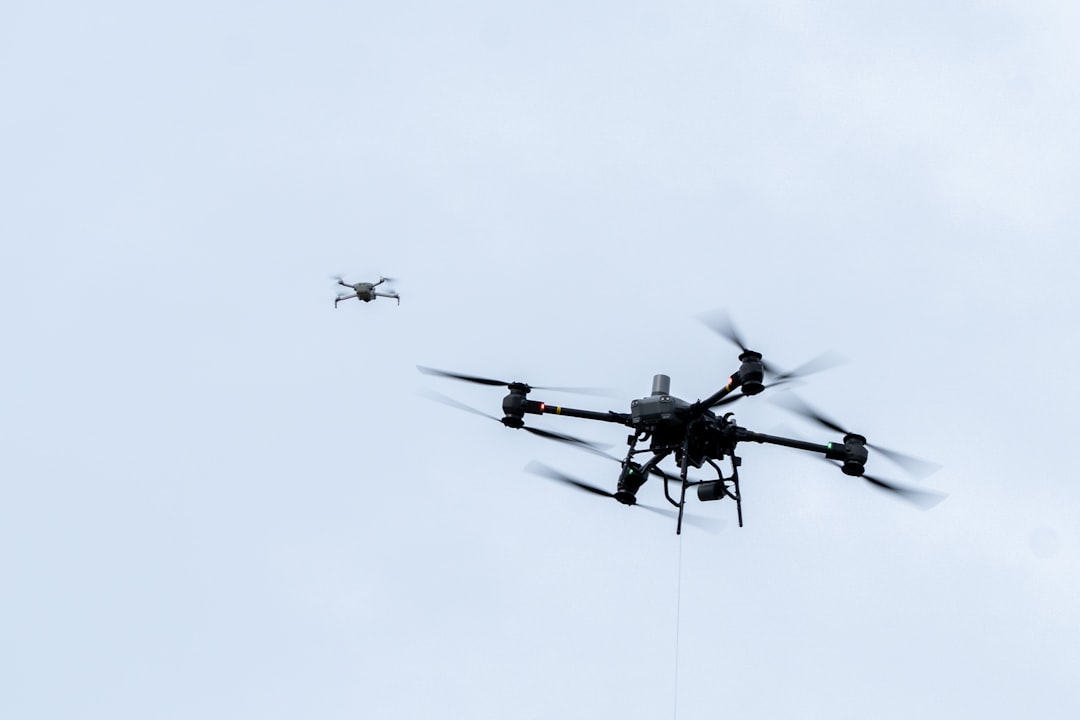
Lucid Bots is a standout player within a much larger and critically important trend: the use of drones and robots specifically for safety enhancement. This "Drones for Safety" meta-trend recognizes these flying and rolling machines as essential tools for high-risk situations. Their applications are vast and life-saving.
Drones are uniquely suited for operations in confined spaces where humans would risk exposure to toxic gases or structural collapse. They are becoming first responders in public safety scenarios, providing eyes and ears where it’s too dangerous for personnel to go initially. Most pertinently, they are systematically performing the dangerous tasks that have long defined manual labor jobs in industries like construction, utilities, and energy. This trend is driven by a powerful combination of technological advancement and a growing cultural imperative to protect workers at all costs.
How Drones Are Building a Safer World: Industry Spotlights
The versatility of safety-focused drones is best understood through real-world applications. Across the globe, companies are specializing in using robotics to solve specific, dangerous problems.
Voliro: Specializing in industrial inspection, Voliro’s drone-based robots are built for hard-to-reach assets like storage tanks, powerline towers, and wind turbines. 
Windracers: Based in the UK, this company tackles one of nature’s most destructive forces: wildfires. They have developed autonomous drones capable of both detecting and suppressing fires. In a race against time, these drones can identify hot spots and deliver fire retardant or water with precision. Company leaders state their system can put out a nascent wildfire in less than 10 minutes—a critical window that can prevent a small blaze from becoming a catastrophic inferno, protecting both communities and the firefighters who would otherwise confront it directly.
Jouav: This company focuses on heavy industry, providing drones for the mining and oil and gas sectors. Their drones conduct inspections in volatile environments, map treacherous terrain, and monitor infrastructure like pipelines and power lines. By sending a drone into a mine shaft for a preliminary survey or along a remote pipeline to check for corrosion, companies can assess risk without exposing employees to potential collapses, gas leaks, or other unseen dangers.
BRINC: Perhaps the most direct application for public safety, BRINC manufactures drones specifically for police and first responders. Equipped with thermal imaging, emergency lights and sirens, two-way communication loudspeakers, and even the ability to breach barriers, these drones are designed for high-stakes scenarios like hostage situations, search and rescue in unstable buildings, or engaging with armed individuals. With deployments at over 400 public safety agencies, BRINC drones allow law enforcement to gather crucial intelligence and communicate without escalating physical confrontation, protecting both officers and the public.
The Human Impact: More Than Just Efficiency
While the efficiency gains from companies like Lucid Bots and Voliro are quantifiable—80% cost savings, 2.5x speed—the human impact is immeasurable. Every task transferred from a human on a rope to a drone in the air represents a potential life saved, a serious injury avoided, and a family kept whole. The psychological benefit is also profound. Workers can focus on skilled oversight, data analysis, and strategic planning rather than fearing for their safety during routine but perilous tasks. This leads to higher job satisfaction, better morale, and attracts a new tech-savvy generation to industries traditionally seen as dirty and dangerous.
Furthermore, these technologies often lead to better outcomes. A drone with LiDAR and 4K cameras can detect a hairline crack in a wind turbine blade that might be missed by the human eye from a distance. Consistent, data-rich inspections create a clearer maintenance picture, allowing for predictive upkeep that prevents larger failures. In public safety, a drone with thermal imaging can locate a missing person in a dense forest at night far quicker than a ground team, turning a potential tragedy into a rescue.
Conclusion: Embracing a Collaborative Future
The narrative is shifting from humans versus machines to humans *and* machines. Lucid Bots, alongside innovators like Voliro, Windracers, Jouav, and BRINC, are not building a robotic takeover; they are building a robotic shield. They are creating a future where the most dangerous jobs are handled by durable, intelligent machines designed for those specific hazards.
The "Drones for Safety" trend, exemplified by the wall-cleaning Sherpa and the fire-fighting drones of Windracers, marks a mature and purposeful phase in robotics. It moves beyond novelty to necessity. As the software, like that from Lucid’s acquisition Avianna, becomes more sophisticated, this collaboration will become even more seamless. The goal is clear: to leverage technology so that every worker returns home safely, every first responder has the best possible tools, and our infrastructure is maintained without risking human life. The climb toward absolute workplace safety is steep, but with companies like Lucid Bots leading the ascent, we’re no longer climbing ladders—we’re programming the drones that do.