Onebrief: The Collaborative Digital Battlefield Reshaping Modern Military Planning
Imagine a world where the complex, high-stakes planning for national defense operations moves as fluidly as a team of software developers collaborating on a digital project. Gone are the days of disparate PowerPoint decks, static maps, and email chains that fracture the operational picture. Enter Onebrief, a web-based platform that is fundamentally transforming how military strategists plan, visualize, and execute missions. By harnessing a simple, intuitive concept—the digital card—Onebrief is bringing real-time collaboration, dynamic data integration, and powerful visualization tools to the heart of defense planning. This isn’t just another software tool; it’s a paradigm shift towards a more agile, connected, and informed command structure, operating securely on critical networks like JWICS and SIPR. As we delve into the world of defense technology, a sector that saw startups raise nearly $7.7 billion in 2025 alone, Onebrief stands out as a critical enabler of the modern, software-defined battlespace.
From Static Slides to Dynamic Cards: The Onebrief Revolution
At its core, Onebrief replaces the traditional, linear process of military planning. Instead of building isolated briefings in PowerPoint, planners use interactive cards to store every piece of information—intelligence reports, logistical details, enemy assessments, and friendly force dispositions. Think of these cards as digital sticky notes with superpowers. Users can move them, link them, and embed data within them, creating a living, interconnected web of the operational plan. This card-based system breaks down information silos. A logistics officer’s card on fuel supply can be directly linked to an aviation unit’s card, providing immediate visibility into constraints and capabilities.
The platform’s ability to import files from various sources and transform that data into actionable, movable elements is a game-changer. A PDF intelligence report becomes a set of cards; a spreadsheet of troop movements becomes an interactive timeline. This fluidity allows for rapid course-of-action development and wargaming. Teams can collaboratively rearrange elements of the plan in real-time, instantly seeing the second and third-order effects across the entire operational canvas. Onebrief doesn’t just store information; it makes it malleable and collaborative, turning the planning process from a sequential briefing build into a simultaneous, integrated workshop.
Building the Common Operational Picture: Maps, Timelines, and Charts
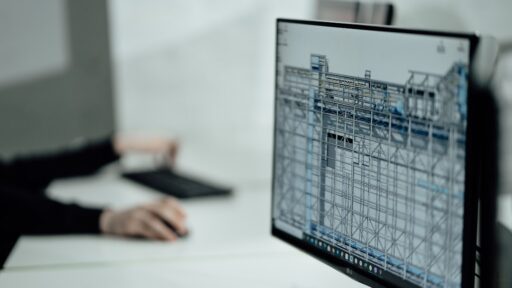
Information trapped in documents is of limited use. Onebrief’s true power is unlocked in its visualization engines. Those dynamic cards don’t just sit in a list; they populate interactive maps, detailed timelines, and analytical charts with a few clicks. A planner can drag a unit card onto a map to see its position, then drag a timing card onto a Gantt-style timeline to sequence operations. The system automatically builds the connections, creating a synchronized common operational picture that is always up-to-date.
This means the infamous "slide deck of a hundred slides" is generated automatically from the living plan, not the other way around. Briefings become a real-time window into the current plan, not a static snapshot from hours or days ago. Commanders can drill down from a high-level chart into the granular details on a card with a single click. This seamless integration of data and visualization drastically reduces the "fog of peace"—the confusion and misalignment that can occur during planning—and ensures every stakeholder, from intelligence analysts to frontline commanders, is literally on the same map.
Secure, Real-Time Collaboration in the Defense Ecosystem
Military operations demand the highest levels of security. Onebrief is built for this environment, being actively used on the U.S. Department of Defense’s classified networks, including the Joint Worldwide Intelligence Communications System (JWICS) and the Secret Internet Protocol Router Network (SIPRNet). This isn’t a commercial tool adapted for defense; it’s engineered from the ground up to meet stringent security protocols while delivering a modern user experience. This secure foundation enables real-time collaboration that was previously impossible. Planners across different geographical locations and command structures can now work on the same plan simultaneously, seeing each other’s changes and communicating within the platform.
This collaborative model accelerates decision cycles and improves plan quality through continuous input and validation. It fosters a more inclusive planning process where expertise from various domains is integrated seamlessly. In an era of joint all-domain command and control (JADC2), this ability to collaborate securely and in real-time across services and classifications is not just convenient; it’s a strategic imperative.
Onebrief and the Defense Tech Meta-Trend
Onebrief is a pivotal piece of a much larger story: the rapid modernization and technological infusion into national defense. The defense tech sector is booming, with startups raising nearly $7.7 billion in 2025, signaling massive private and public investment in next-generation capabilities. This meta-trend is about moving beyond just hardware to software-defined, AI-enabled, and network-centric systems. Companies like Anduril Industries are building autonomous defense systems and sensing towers; Shield AI is pioneering AI-piloted aircraft for contested environments; Archer Aviation is adapting its electric vertical take-off and landing (eVTOL) technology for defense logistics; and True Anomaly is focusing on space domain awareness and defense.
Where does Onebrief fit in this landscape of cutting-edge hardware? It is the central nervous system. All these advanced platforms—drones, jets, space vehicles—generate vast amounts of data and require precise coordination. Onebrief provides the planning and command layer that turns a collection of advanced tools into a coherent, orchestrated force. It is the software that defines how these hardware systems will be used, together, to achieve mission objectives. Without a modern planning and collaboration platform like Onebrief, the full potential of these technological marvels cannot be realized efficiently.
The Future of Command: Agile, Informed, and Connected
The future of military advantage lies not solely in having the best equipment, but in having the best-informed and fastest decision-making cycle. Onebrief is at the forefront of enabling this shift. By digitizing and democratizing the planning process, it empowers staff at all levels to contribute meaningfully and understand the broader mission context. The platform’s continuous evolution likely points towards deeper AI integration—using machine learning to suggest plan optimizations, identify logistical bottlenecks, or even simulate adversary reactions based on intelligence data fed into the card system.
As warfare becomes more complex and paced by data, the ability to plan adaptively and collaboratively becomes a critical combat multiplier. Onebrief is moving the command post from a physical room with paper maps into a persistent, secure, digital environment that spans continents and domains. It represents a quiet but profound revolution in how defense professionals think, plan, and ultimately, act.
Conclusion: Redefining the Art of the Possible in Defense Planning
Onebrief is more than a productivity tool for the military; it is a foundational technology reshaping the art of command. By replacing static documents with dynamic cards, fostering real-time collaboration on secure networks, and automatically generating a unified operational picture, it addresses some of the most persistent challenges in military planning. In the context of a red-hot defense tech sector focused on autonomous systems and AI, Onebrief provides the essential command, control, and planning layer that binds these innovations together into a effective force.
Its adoption on networks like JWICS and SIPRNet is a testament to its utility and security. As global threats evolve and become more technologically sophisticated, the need for agile, software-driven planning and coordination will only intensify. Onebrief is not just keeping pace with this change; it is actively driving it, proving that the future of defense is not only about what you can build, but about how brilliantly you can plan to use it.