The Dawn of a Quantum Era: Quandela’s Pioneering Path
In the high-stakes race to build the future of computing, a quiet but formidable contender is emerging from Europe. Quandela, a French quantum computer manufacturer, is not just dreaming of a quantum future; it is methodically building it, one photon at a time. While headlines often focus on tech giants, Quandela’s story is one of tangible progress in a field still shrouded in theoretical potential. With four machines already deployed to industrial clients and a recent $58 million Series B funding boost, this startup is transitioning quantum computing from lab curiosity to a tool for real-world problem-solving. Their journey offers a compelling blueprint for how practical quantum advantage might be achieved, not in some distant decade, but within this one.
The global quantum landscape is heating up, with nations and corporations collectively pouring over $55 billion into the technology. It’s a bet on a paradigm shift. Quantum computing promises to revolutionize fields from drug discovery and materials science to cryptography and financial modeling by harnessing the bizarre laws of quantum mechanics. As Google announces new milestones with its Willow chip and companies like Rigetti Computing and Quantum Machines push their own architectures, Quandela represents a distinct and crucial European strand in this global tapestry. Their progress signals that the era of niche experimentation is giving way to one of industrialization and application.
From Photons to Products: Quandela’s Unique Approach
At the heart of Quandela’s strategy is a focus on photonic quantum computing. Unlike some competitors who use superconducting loops or trapped ions, Quandela’s machines use particles of light—photons—as their quantum bits, or qubits. This approach offers inherent advantages, such as the ability to operate at room temperature and potentially easier integration with existing telecommunications fiber networks. 
Quandela’s most significant claim to credibility is its customer roster. While many in the quantum space are still in the prototype-and-promise phase, Quandela has already placed four of its quantum computers with industrial clients. One notable customer is the European High-Performance Computing Joint Undertaking (EuroHPC JU), a pan-European initiative, which has acquired a Quandela machine. This is a powerful endorsement, signifying that European research bodies are betting on homegrown technology to secure sovereignty in this critical field. These deployments are not about solving grand, world-changing problems yet; they are vital stepping stones. They allow clients to begin developing algorithms, testing use cases, and training their teams on actual quantum hardware, building the essential muscle memory for the quantum age.
The Holy Grail: Logical Qubits and the Road to 2030
The core challenge of quantum computing is fragility. Today’s qubits are prone to errors from the slightest environmental disturbance. This is why current machines are often called "noisy intermediate-scale quantum" (NISQ) devices. The key to moving beyond this noisy era is the development of logical qubits. A logical qubit isn’t a single physical particle; it’s a robust information unit formed by entangling multiple error-prone physical qubits together, using quantum error correction codes to protect the data.
Quandela has set a bold and specific technical goal for this year: to demonstrate its first logical qubit. Achieving this would be a monumental milestone, not just for the company but for the entire photonic quantum computing field. It represents the fundamental building block for a fault-tolerant quantum computer—a machine whose computations you can trust. This ambition directly feeds into Quandela’s overarching vision: to industrialize logical qubit technology by 2030. This timeline aligns intriguingly with broader industry predictions that practical quantum advantage—the point where a quantum computer outperforms a classical supercomputer on a useful task—could become a reality by the end of the decade.
The $55 Billion Global Race: Context and Competition
To appreciate Quandela’s position, one must view it within the frenetic global quantum ecosystem. The $55+ billion in public funding worldwide underscores that this is considered a strategic technology on par with artificial intelligence or semiconductors. China, the United States, and the European Union are all vying for leadership, knowing that quantum capabilities could redefine economic and national security.
Within the private sector, the landscape is diverse. Google and IBM are pursuing superconducting qubits, constantly pushing qubit counts and error rates. Companies like Quantum Machines specialize in the crucial control hardware that operates quantum processors. Rigetti Computing, like Quandela, is a dedicated quantum hardware company working on its own superconducting architectures. 
What Quantum Advantage Actually Means for Industries
The term "quantum advantage" is often thrown around, but what would it look like in practice? It won’t mean a quantum chip in your smartphone. Initially, it will be a cloud-accessible resource for solving specific, complex problems that are intractable for even the most powerful supercomputers today.
Imagine a pharmaceutical company simulating the precise quantum interactions of a new drug molecule with its target in the human body, slashing years off the R&D timeline. Picture a materials scientist designing a new room-temperature superconductor or a more efficient battery catalyst by modeling atomic structures directly. For the finance sector, it could mean ultra-complex risk analysis and optimization of trading portfolios. For logistics giants, it could mean solving nightmarish routing and scheduling problems for global supply chains in minutes. These are the promises that drive the investments in companies like Quandela. Their current industrial deployments are the first steps toward identifying which of these applications will yield the "killer app" for quantum computing.
Looking Ahead: The Industrialization of Quantum
Quandela’s roadmap from a startup to a company with industrialized technology by 2030 outlines the maturation of the entire sector. The journey involves several phases: first, continuing to improve the stability and scale of their physical photonic qubits. Next, successfully integrating those into error-corrected logical qubits. Then, scaling the number of logical qubits to create a powerful, fault-tolerant quantum processing unit. Finally, integrating these QPUs into full-stack computing systems that are reliable and accessible enough for widespread industrial use.
This is a colossal engineering challenge. It will require advancements not just in quantum physics, but in cryogenics (for other approaches), control electronics, software, algorithms, and cybersecurity. The recent $58 million funding round is the fuel for this next leg of the journey, allowing Quandela to expand its engineering teams, accelerate R&D, and scale its infrastructure.
Conclusion: A Quantum Future in the Making
The story of Quandela is a microcosm of the broader quantum computing narrative: a transition from pure science to applied engineering, from theoretical potential to practical deployment. While the full manifestation of quantum advantage may still be a few years away, the groundwork is being laid today. Companies are already interacting with quantum hardware, researchers are refining algorithms, and governments are building strategic frameworks.
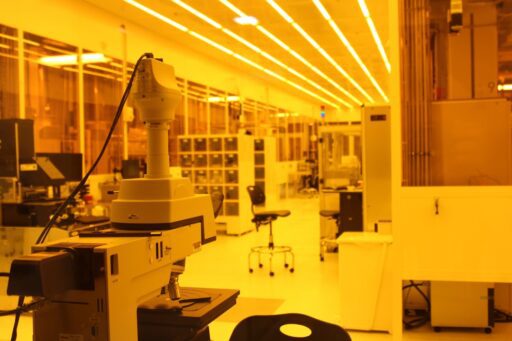
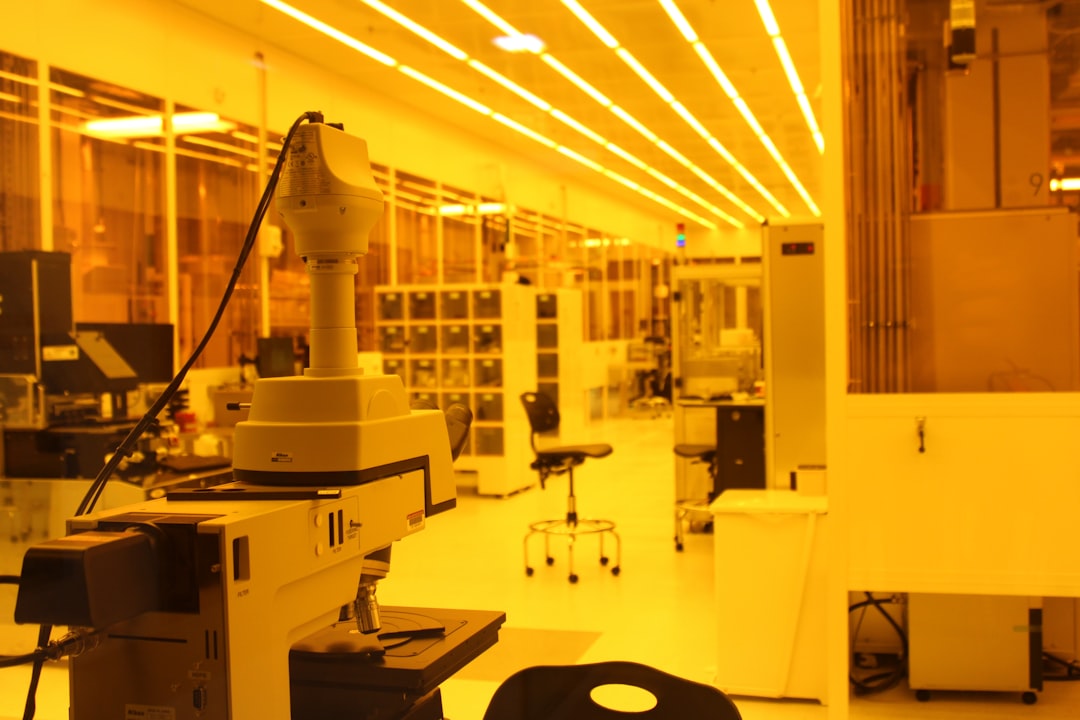
Quandela, with its deployed machines, its pursuit of logical qubits, and its clear-eyed 2030 vision for industrialization, is proving that the quantum future is not an abstract concept. It is a tangible goal being constructed in cleanrooms and data centers. As the global race accelerates, the success of agile, focused players like Quandela will be crucial in ensuring a diverse, innovative, and competitive quantum ecosystem. The quantum leap is underway, and it’s being powered by photons, ambition, and the relentless pursuit of a computational revolution.